







Chrome Web Store ASO in 2026: The Complete Guide for Indie Makers to Rank Higher & Acquire More Users
Master Chrome Web Store ASO in 2026. Proven strategies for title, descriptions, screenshots, retention and WAU signals that help indie makers acquire more users.
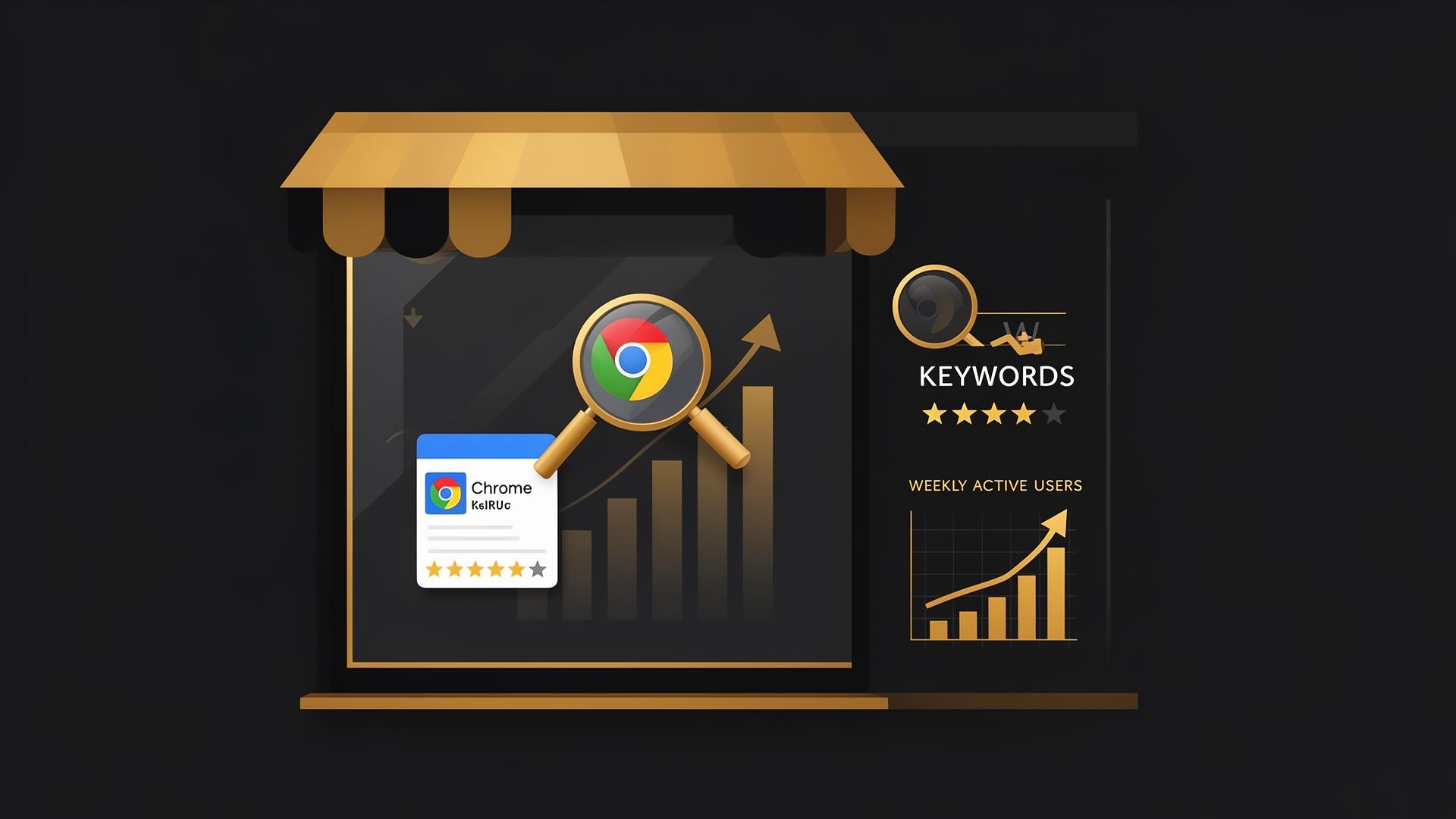
Chrome Web Store ASO (App Store Optimization) is the strategic process of refining your extension's title, short and long descriptions, screenshots, videos, category, tags, and supporting signals like retention and reviews to improve visibility in Chrome Web Store search results, category rankings, and recommendations — ultimately driving more organic installs without relying solely on paid ads or viral luck.
For indie makers and vibe coders building in public or as solopreneurs, mastering ASO in 2026 means you can validate ideas faster, shorten the path from launch to first 1,000 users, and build sustainable momentum even in a store with over 251,000 competing extensions. You'll learn exactly how the algorithm has shifted toward Weekly Active Users (WAU) and retention, practical frameworks you can implement this week, realistic ROI expectations, and how pairing your optimized store listing with a dedicated landing page creates a powerful acquisition flywheel. Plus, we'll show you how tools like curated opportunity databases can shortcut months of manual competitor research.
If you've ever launched an extension only to watch it languish with single-digit daily installs despite "great" features, this guide is your roadmap to changing that.
What Is Chrome Web Store ASO and Why Does It Matter More Than Ever for Indie Makers in 2026?
Chrome Web Store ASO is not traditional Google SEO. It's a specialized form of marketplace optimization focused on the unique signals the Chrome Web Store algorithm uses: semantic relevance of your metadata, visual conversion power of screenshots and videos, and — most importantly in 2026 — post-install behavioral signals like Weekly Active Users (WAU), retention curves, and review velocity and recency.
Think of the Chrome Web Store as a massive, algorithmically curated mall. Your extension's listing is the storefront window. A great window gets browsers to stop, read, and click "Add to Chrome." But unlike a physical store, the algorithm also watches what happens *after* they install. If they open it once and never return, your ranking suffers. If they use it daily and leave a recent 5-star review, you climb.
Why it matters acutely for indie makers and vibe coders right now: the store is brutally competitive with 251k+ extensions, yet 90.11% have fewer than 1,000 users and only 0.7% exceed 100,000 users (Backlinko, 2026). Chrome's 68.02% worldwide browser market share means even modest ranking gains translate to thousands of potential users. The 2026 algorithm shift toward WAU and retention rewards builders who obsess over onboarding and engagement loops — not just pretty listings.
If you skip ASO or treat it as an afterthought, you're essentially hoping the algorithm discovers your hidden gem by accident. In 2026, that rarely happens at scale.
How the Chrome Web Store Ranking Algorithm Actually Works in 2026 (And What Changed)
The algorithm has evolved significantly post-Manifest V3. Raw download velocity still matters for new launches, but sustained Weekly Active Users (WAU) has become the dominant Tier-1 signal. An extension with 50k lifetime installs but only 800 WAU will often rank below one with stronger retention even if the latter has fewer total installs.
Current weighted signals (practitioner consensus + official docs):
| Tier | Signal | Why It Matters |
|---|---|---|
| Tier 1 | Weekly Active Users (WAU) vs install base | Single strongest predictor of ranking velocity |
| Tier 1 | Rating quality + recency | Recent 4.5–5 star reviews beat hundreds of old ones |
| Tier 1 | Semantic relevance (NLP) | Keyword stuffing is penalized or ignored |
| Tier 2 | Install-to-uninstall ratio (first 48h) | Early churn kills momentum |
| Tier 2 | Engagement depth and frequency | Daily use beats weekly use |
| Tier 2 | Regular meaningful updates | Signals active maintenance |
| Tier 2 | Manifest V3 compliance | MV2 extensions are deprioritized |
| Tier 3 | Metadata completeness | Title, descriptions, screenshots, privacy |
| Tier 3 | Verified publisher status | Trust signal |
| Tier 3 | External backlinks and referral traffic | Off-store signals matter |
Key implication: Perfect metadata without retention is like a beautiful restaurant with no repeat customers — the algorithm eventually stops seating new guests. Conversely, a mediocre listing with exceptional daily engagement can still climb because WAU signals product-market fit.
Step-by-Step Chrome Web Store ASO Framework: Title, Descriptions & Keywords
Title Optimization (75 characters max — highest leverage field)
Format that consistently works in 2026: [Extension Name] – [Primary User Benefit + Target Keyword]
- "TabOrg – Organize 100+ Browser Tabs Instantly"
- "ScreenGrab – Full Page Screenshot & Annotation Tool"
- "MeetNotes AI – Instant Google Meet Summaries & Action Items"
For AI-heavy extensions, include "AI" if it's a core differentiator and users search for it, but don't force it. You can update titles later, but big changes may reset some momentum — plan thoughtfully.
Short Description (First 150 characters)
Treat this exactly like a high-stakes ad headline. Include primary keyword naturally, deliver the core value proposition, and create curiosity or urgency. Example: "Automatically organize your tabs, close duplicates, and save sessions with one click. Never lose context again."
Full Description Structure
- Hook (first 150 chars): Keyword + benefit.
- Feature bullets (400–600 chars): 4–6 scannable benefits with secondary/LSI keywords used naturally.
- Use cases / Who it's for (200–300 chars): "Perfect for researchers, developers, and power users who juggle 50+ tabs daily…"
- Social proof / results if you have them.
- Technical / trust: permissions explained transparently, privacy commitment, update cadence.
Common mistake: Keyword stuffing in the long description. The algorithm is smart enough to penalize or devalue it. Focus on readable, benefit-driven copy that also happens to contain relevant terms.
Screenshots, Videos & Visuals That Actually Convert
Screenshots are frequently the #1 or #2 factor in impression-to-install conversion rate. Users decide in 2–3 seconds whether your extension looks useful and trustworthy.
- First screenshot is critical — make it the hero visual showing the core value in action, annotated with arrows or callouts.
- Use a consistent visual style and branding across all screenshots.
- Show before/after or problem → solution sequences.
- Include one screenshot per major feature; avoid cramming everything into one image.
- Add subtle text overlays explaining what the user is seeing ("One-click organize", "Smart groups created automatically").
- For complex extensions, consider a 30–60 second demo video showing real usage.
Many indie makers spend 20+ hours perfecting code but only 45 minutes on screenshots. That imbalance is one of the fastest ways to leave users on the table. Tools like Canva (free templates, perfect for clean annotated screenshots) or Guideflow (interactive product demos that double as Loom-style videos) can cut the production time in half without sacrificing polish.
Retention, Reviews & WAU: The 2026 Ranking Signals That Separate 100-User Extensions from 100k-User Ones
This is where most "ASO guides" stop being useful and where real growth happens (or dies). You can have a flawless listing and still plateau if users install, try once, and churn.
Actionable retention framework for indie makers:
- Onboarding that delivers value in <60 seconds. New tab page? Show the core action immediately. Tab organizer? Auto-detect and suggest first groups on first open.
- Explain permissions contextually inside the extension and mention them transparently in the listing. Surprise permission requests are a top cause of instant uninstalls.
- Build daily or frequent engagement loops — notifications, streak counters, smart defaults, or "today's insight" features. Daily active use beats weekly.
- Prompt for reviews at moments of delight, not on first launch. Post-update or after completing a meaningful task.
- Respond to every review (yes, even 1- and 2-star). Thoughtful responses turn detractors into promoters and signal active maintenance to the algorithm.
Review velocity hack: Aim for 3+ new reviews per month minimum once you have meaningful users. Recency matters more than total volume. If you also want to surface those reviews on your landing page as social proof, Testimonial.to makes collecting and embedding text and video testimonials trivial.
Monitor these in the Developer Dashboard weekly: WAU trend, WAU / Total Installs ratio (healthy target >15–20%), 7-day uninstall rate (keep under 15%), and impression → install conversion rate (benchmark 5%+ for optimized listings). For deeper retention playbooks, see our Chrome extension UX & retention guide.
How to Use the Official Chrome Web Store Developer Dashboard & GA4 to Drive Continuous Improvement
The developer dashboard is your primary (free) growth tool. Key reports: impressions and page views, installs vs uninstalls, Weekly Users (WAU), demographics by country and language, and native GA4 integration for custom in-extension events.
Pro workflow for vibe coders: Check the dashboard every Sunday evening (15–20 min), note spikes and drops, correlate with recent changes or promotion, and use GA4 to answer "What do users actually do in the first 5 minutes?" — then fix friction. This data loop turns ASO from a one-time launch task into a living growth system.
Pairing Chrome Web Store ASO with a High-Converting Landing Page: The Indie Maker Flywheel Most People Miss
The Chrome Web Store listing is optimized for frictionless install, not deep education or trust-building. A dedicated landing page on your domain captures emails for onboarding sequences, lets you run paid ads or content marketing to a controlled experience, and builds topical authority and backlinks that feed external signals back into your store ranking.
Recommended tech stack for indie makers: Build a landing page with Lovable (AI-generated full-stack landing pages and dashboards in hours, ideal if you want a premium feel with interactive demos), Carrd ($9/yr, beautiful one-pager live in an afternoon), or Framer ($15/mo+, animations and interactive demos). Pair it with MailerLite or Kit for email capture and onboarding sequences — both have generous free tiers.
For keyword and competitor research that goes deeper than the store search bar, Mangools is the most affordable all-in-one SEO suite — useful for finding what people Google *before* they land in the Chrome Web Store (a huge organic acquisition channel most makers ignore).
Pro tip: On your landing page, include a prominent "Also available in the Chrome Web Store" section with the official badge and link. This creates a seamless path while giving Google another signal that your extension exists and is legitimate.
Common Mistakes Indie Makers Make with Chrome Web Store ASO
- Treating ASO as a one-time launch task instead of an ongoing system — installs decay without monitoring WAU and iterating on onboarding.
- Keyword stuffing — the semantic NLP in 2026 devalues obvious stuffing and produces copy that converts poorly.
- Ignoring the first 48-hour experience — most uninstalls happen quickly; without an "aha!" moment fast, beautiful screenshots won't save your ranking trajectory.
- Building in a vacuum without studying what already works or failed — see our guide to validating Chrome extension ideas and learning from expired extensions.
- Under-investing in visuals and social proof — screenshots and recent reviews are conversion machines.
Is Chrome Web Store ASO Worth Your Time as an Indie Maker? Realistic ROI & Economics
Yes — with the right expectations and execution. It's one of the best "set it and improve it" channels available to solopreneurs because marginal improvements compound over months and years with almost zero ongoing ad spend.
| Time Investment | Monetary Investment | Expected Outcome (6–12 months) | Key Assumptions |
|---|---|---|---|
| 15–40 hrs initial + 2–4 hrs/week | $0–$150 | 5k–50k+ cumulative users; $0–$5k+ MRR potential if monetized | Working extension; basic design skills or no-code tools; consistent iteration; category with reasonable demand |
| 8–15 hours (focused audit) | $9–$50 | 1k–10k users + measurable WAU lift within 90 days | Existing users or small launch spike; focus on retention fixes + visual refresh |
Assumptions — Based on aggregated data from Backlinko Chrome stats 2026, ExtensionBooster ranking analysis, Indie Hackers case studies (GMass, CSS Scan, Tactiq, Sitechecker), and Unbounce conversion benchmarks (2025–2026). These are directional estimates only. Real outcomes vary wildly. Some extensions never break 500 users despite perfect listings; others quietly compound to six figures ARR.
Real-World Indie Maker Wins
- Sitechecker (Ivan Palii) — 175K+ users with 20K monthly visitors from Google Search to extension pages; heavy focus on CWS listing optimization + Google Search (Medium).
- GMass — $130K–$200K+ MRR at peaks; dominated a hyper-specific Gmail workflow niche with strong metadata matching exact user intent.
- CSS Scan (Guilherme Rizzo) — $70,000+ total revenue, ~$4K–$10K/month; product-led growth amplified by clean, benefit-focused visuals (Indie Hackers).
- Tactiq — 150K–180K+ users; combined smart ASO (ranking for "meet notes", "transcript") with targeted creator campaigns (Indie Hackers).
The common thread? None of them relied on ASO *alone*. They used it as the foundation that made every other channel convert better.
Continue Learning
- Find your market with profitable Chrome extension niches
- Improve activation with our Chrome extension UX & retention playbook
- Build faster using vibe coding tools
- Monetize retained users with Chrome extension monetization strategies
- Shortcut competitor research with our expired Chrome extensions database
Conclusion: Turn Chrome Web Store ASO into Your Quiet Growth Engine
Chrome Web Store ASO in 2026 is no longer just "write a good description and add pretty screenshots." It's a full system: semantic metadata that matches real user intent, visuals that convert in seconds, onboarding that creates daily habit, review velocity that signals quality, and WAU and retention data that the algorithm now weights most heavily.
Indie makers and vibe coders who treat it this way — and who pair the optimized store listing with a simple, high-converting landing page — give themselves a durable advantage in a store where 99.3% of extensions never reach meaningful scale.
Your next step: Pick one extension (or your current project), run a focused 90-minute ASO audit using the frameworks above, implement the highest-leverage changes this week, and set up your weekly dashboard review ritual.
To shortcut the competitive research and niche validation phase that usually eats weeks, many indie makers use Chrome Goldmine — a curated database of expired and high-potential Chrome extension opportunities. See what patterns already worked (or failed) so you can apply proven ASO tactics faster instead of guessing in the dark.
Keep Reading in This Pillar
- Chrome Extension i18n for Better Web Store Listings — How to translate your Chrome Web Store listing and unlock i18n for Web Store rankings across Spanish, Portuguese, French, German, and Japanese markets.
Choosing the right research stack matters as much as the listing itself. See our Chrome extension tool comparisons — including Chrome Stats vs Chrome Goldmine for live analytics vs opportunity discovery — before you commit.